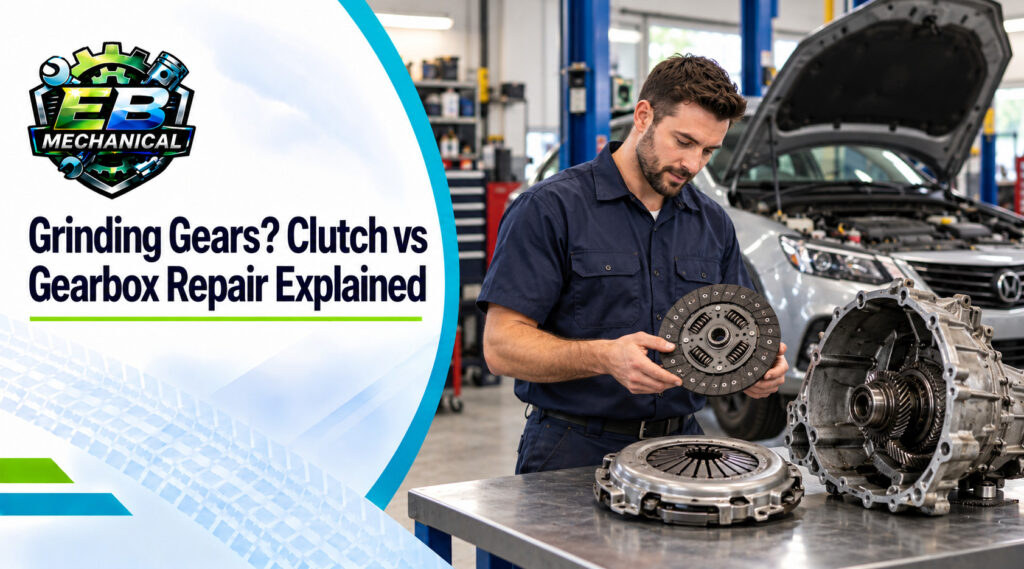
Grinding Gears? Clutch vs Gearbox Repair Explained
Grinding gears, difficulty selecting a gear or a car that jumps out of gear should not be ignored. These symptoms may be caused by a worn clutch, a gearbox fault or another problem in the transmission system.
The clutch and gearbox work together, but they are different components. A clutch problem often affects how power is transferred between the engine and gearbox. A gearbox problem usually affects gear selection, gear engagement or the way the vehicle stays in gear.
Identifying the difference can help you arrange the right inspection before a minor issue develops into a more expensive repair.
What Does the Clutch Do?
In a manual vehicle, the clutch connects the engine to the gearbox. When you press the clutch pedal, the connection is temporarily released so you can change gears or bring the vehicle to a stop without stalling the engine.
A clutch assembly commonly includes:
- Clutch disc
- Pressure plate
- Release bearing
- Flywheel
- Hydraulic or cable-operated release system
These parts experience wear over time, particularly in vehicles used in heavy traffic, on steep roads, for towing or for frequent stop-start driving.
When the clutch is worn or fails to disengage properly, changing gears may become difficult. However, not every grinding noise means the clutch itself needs replacing.
What Does the Gearbox Do?
The gearbox contains the gears that control the relationship between engine speed and road speed. It allows the vehicle to move away from a standstill, accelerate, climb hills and cruise at higher speeds.
A manual gearbox may include:
- Gears and shafts
- Bearings
- Synchro rings
- Selector forks
- Gear oil
- Linkages or cables
If internal components wear or the gearbox oil becomes contaminated or too low, the vehicle may produce whining, humming or grinding noises. It may also become difficult to select one or more gears.
Automatic transmissions use a different design. They do not have a driver-operated clutch pedal, but many automatic transmissions contain internal clutch packs and other components that can wear. A transmission mechanic must diagnose the type of transmission before recommending a repair.
Clutch Problem or Gearbox Problem?
Some symptoms overlap, which is why a proper diagnosis matters.
| Symptom | Possible clutch cause | Possible gearbox cause |
|---|---|---|
| Engine revs rise but the vehicle does not accelerate properly | Worn or slipping clutch | Less likely, but transmission faults can also affect drive |
| Grinding when selecting several gears | Clutch not fully disengaging | Internal wear or damaged synchros |
| Grinding in one particular gear | Less likely | Worn synchroniser or gear component |
| Difficulty selecting gears with the engine running | Clutch hydraulic or release fault | Selector or internal gearbox issue |
| Gear jumps out while driving | Usually not the clutch | Worn gears, selector parts or internal damage |
| Whining that changes with road speed | Not usually the clutch | Low oil, worn bearings or gear damage |
| Burning smell after acceleration | Slipping clutch | Overheated transmission may also produce a burning smell |
| Shuddering when moving away | Worn clutch, flywheel or contamination | Possible drivetrain or transmission issue |
This table is a guide only. The same symptom can have more than one cause, especially in older vehicles or cars with previous repair work.
Signs Your Clutch May Need Repair
A worn clutch can affect acceleration and gear changes before it stops the vehicle from moving. Common warning signs include:
Engine Revs Rise Without Matching Acceleration
This is one of the most recognisable signs of clutch slip. The engine speed increases, but the vehicle does not accelerate as expected. It may be more noticeable when accelerating uphill, overtaking or carrying a heavy load.
The Clutch Pedal Feels Different
A clutch pedal that suddenly feels soft, heavy, stiff or difficult to press should be inspected. A hydraulic leak, air in the system, a damaged cable or worn release components can all change pedal feel.
The Biting Point Is Unusually High
A high engagement point can indicate clutch wear, although the correct position varies between vehicles. It should be assessed together with other symptoms rather than treated as proof of failure.
Burning Smell
A strong burning smell after hill starts, heavy traffic or towing may indicate clutch slip. Continuing to drive while the clutch is slipping can damage other components, including the flywheel.
Shuddering When Moving Off
Juddering or vibration as the clutch engages may be caused by a worn clutch disc, a damaged pressure plate, flywheel problems or contamination from oil.
Difficulty Selecting Gears
If the clutch does not fully disengage, it can become difficult to select first gear or reverse. Grinding may occur even when the driver is pressing the clutch pedal.
Signs the Gearbox May Need Repair
A gearbox fault is more likely when the noise or problem is linked to a particular gear or changes with vehicle speed.
Watch for:
- Grinding in one or more gears
- A whining or humming sound while driving
- A gear that jumps out under acceleration
- Difficulty selecting a specific gear
- Excessive movement in the gear lever
- Oil leaking from the transmission
- A burning smell from overheated or low transmission fluid
- Delayed or rough gear engagement
- New noises that change when you accelerate or decelerate
A damaged synchroniser may cause grinding when changing into a particular gear. Worn bearings can create a whine that changes with road speed. Low or incorrect gearbox oil can also increase noise and wear.
Why Are Gears Grinding?
Grinding occurs when rotating components are not matching speed correctly before they engage. In a manual vehicle, the clutch may not be separating the engine from the gearbox completely. This can keep the input shaft rotating and make gear engagement difficult.
Other possible causes include:
- Worn synchroniser rings
- Damaged gears
- Low or contaminated gearbox oil
- Worn selector cables or linkages
- Hydraulic clutch problems
- A damaged release bearing
- Incorrect clutch adjustment
- Driver technique
- Internal transmission wear
Do not continue forcing the gear lever into position. It can increase damage to the gearbox and make the repair more expensive.
What About Automatic Transmissions?
Automatic vehicles do not have the same clutch pedal as manual vehicles, but they can still develop transmission faults.
Possible warning signs include:
- Harsh or delayed gear changes
- Shuddering under acceleration
- Revs rising without normal acceleration
- A delay before Drive or Reverse engages
- Transmission warning lights
- Fluid leaks
- A burning smell
- Unusual whining or humming
Some automatic transmissions use internal clutch packs, while others use different systems. The correct repair may involve a fluid service, electrical diagnosis, solenoid repair, valve-body work or internal transmission repairs.
Avoid assuming that an automatic transmission needs a complete replacement before it has been properly assessed.
Can You Drive with Grinding Gears?
It depends on the severity and cause, but continuing to drive with grinding gears is not recommended.
Arrange an inspection as soon as possible if:
- Grinding happens repeatedly
- The vehicle cannot select a gear properly
- The clutch is slipping
- A gear jumps out
- There is a strong burning smell
- Transmission fluid is leaking
- The vehicle struggles to accelerate safely
- The clutch pedal becomes soft or stays on the floor
If the vehicle cannot engage a gear, produces severe noise or loses drive, arrange roadside assistance rather than continuing to drive it.
How Does a Mechanic Diagnose the Problem?
A transmission mechanic will usually begin by asking when the fault occurs and whether it happens when the vehicle is cold, hot, accelerating, braking or changing into a particular gear.
The inspection may include:
- Checking clutch pedal operation
- Inspecting the clutch hydraulic system
- Checking for fluid leaks
- Examining gearbox oil condition and level
- Inspecting selector cables and linkages
- Road-testing the vehicle where safe
- Checking for warning lights and stored fault codes
- Listening for noises under different loads
- Assessing gear engagement and clutch slip
- Inspecting the clutch, flywheel or gearbox if removal is required
The diagnosis should identify whether the repair is likely to involve the clutch, release system, flywheel, gearbox, transmission fluid, selector mechanism or another drivetrain component.
Clutch Replacement or Gearbox Repair?
The recommended repair depends on the failed component.
A clutch repair may involve replacing:
- Clutch disc
- Pressure plate
- Release bearing
- Hydraulic components
- Flywheel, if damaged or outside specifications
A gearbox repair may involve:
- Gearbox oil replacement
- Selector cable or linkage repair
- Synchroniser replacement
- Bearing replacement
- Gear replacement
- Seal replacement
- Internal gearbox rebuilding
- Gearbox replacement in severe cases
A clutch replacement often requires removing the gearbox to access the clutch assembly. This is why a mechanic may recommend inspecting related components at the same time.
How Can You Help Prevent Clutch and Gearbox Problems?
Good driving habits and regular servicing can help reduce unnecessary wear.
- Avoid resting your foot on the clutch pedal.
- Do not hold the vehicle on a hill using clutch slip.
- Use the handbrake when starting on an incline.
- Change gears smoothly and avoid forcing the gear lever.
- Follow the manufacturer’s servicing schedule.
- Use the correct gearbox oil or transmission fluid.
- Do not ignore small leaks.
- Avoid overloading the vehicle beyond its limits.
- Have towing or commercial-use vehicles inspected regularly.
- Ask for advice if the clutch pedal or gear changes feel different.
Clutch wear cannot always be prevented, but early diagnosis may help protect the flywheel and gearbox from additional damage.
Book Gearbox Repair in Ormiston
Grinding gears, clutch slip and difficult gear selection can have several possible causes. A proper inspection is the safest way to determine whether you need clutch work, gearbox repair or another transmission service.
EB Mechanical provides clutch and gearbox repairs for drivers in Ormiston, Cleveland, Wellington Point, Capalaba, Thorneside, Redland Bay and surrounding Redlands areas. The workshop can assess manual and automatic transmission concerns and explain the recommended repair before work begins.
To discuss a transmission problem, contact EB Mechanical or learn more about clutch and gearbox repairs.
Need a car service in the Redlands?
EB Mechanical services and repairs all makes and models at our Ormiston workshop, close to Cleveland, Wellington Point and Capalaba. Clear advice and approved quotes before any work starts.