Direct answer: The best way to avoid costly car repairs is to follow your vehicle’s service schedule, check basic items regularly and arrange an inspection as soon as you notice a change in noise, performance, warning lights or fluid levels.
Why regular car service helps prevent expensive repairs
Regular car service helps EB Mechanical identify wear and developing faults before they cause a breakdown. A scheduled service checks key vehicle systems and gives you a chance to address smaller repairs before they affect larger components. Your vehicle’s handbook contains the correct service requirements for its make and model. Following that schedule can support reliable performance and may help maintain the manufacturer’s warranty requirements. The right service plan depends on the vehicle, its age, its condition and how it is used.What to keep in your service routine
A practical maintenance routine should include these checks:- Service schedule: Follow the manufacturer’s recommended servicing intervals.
- Engine oil: Check the level and arrange changes at the required interval.
- Tyres: Check pressure, tread condition and visible damage.
- Brakes: Arrange an inspection if braking feels different or sounds unusual.
- Fluids: Look for low levels, leaks or changes in appearance.
- Warning lights: Arrange diagnosis instead of continuing to drive with a persistent warning.
Check the engine oil before a problem develops
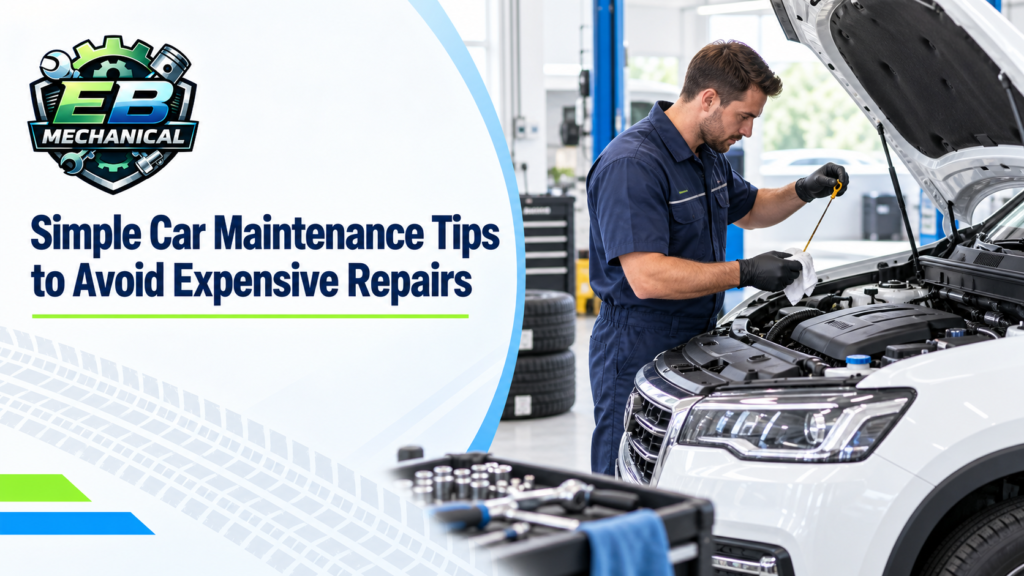
Checking the engine oil helps you spot a low level or possible leak before the engine suffers unnecessary wear. Oil lubricates internal engine parts, so the correct level and suitable oil are important for reliable operation. Check the oil on level ground with the engine switched off, following the instructions in the vehicle handbook. If the level keeps dropping, arrange an inspection rather than repeatedly topping it up without finding the cause. Oil that looks unusual, a burning smell or a new oil leak should also be checked by a qualified mechanic. The correct oil type and change interval vary between vehicles.Keep tyres correctly inflated and inspect them regularly
Correct tyre pressure supports handling, braking and even wear. EB Mechanical recommends checking the pressures against the vehicle manufacturer’s specifications, rather than relying on the maximum pressure printed on the tyre sidewall. Inspect the tread and sidewalls for cuts, bulges, cracking or objects lodged in the rubber. Uneven wear can point to incorrect pressure, worn suspension parts or wheel alignment concerns. Tyre pressure should be checked when the tyres are cold, including before a longer trip. A tyre that repeatedly loses pressure needs an inspection, as it may have a puncture, valve fault or other damage.Pay attention to brake performance
Changes in brake performance should be inspected promptly. Squealing, grinding, steering vibration during braking, a spongy pedal or a vehicle that pulls to one side can indicate a developing brake problem. Brake pads and other parts wear over time. Delaying an inspection can allow a smaller worn component to affect discs, callipers or other parts of the braking system. Do not keep driving if the brake pedal feels unsafe or braking performance changes sharply. Contact EB Mechanical for advice and arrange a brake inspection.Check fluids and watch for leaks
Vehicle fluids help cooling, lubrication, braking, steering and windscreen visibility systems operate correctly. Low levels or leaks can turn a manageable repair into a larger mechanical issue. Common fluid checks include engine coolant, brake fluid, engine oil, windscreen washer fluid and, where applicable, power steering fluid. Your handbook explains which checks are suitable for your vehicle and where the reservoirs are located. Never remove a coolant cap while the engine is hot. If you see a puddle, smell coolant or notice the temperature gauge rising, stop in a safe place and arrange professional advice.Replace filters when your vehicle needs them
Engine air filters help limit dirt entering the engine, while cabin filters help filter air entering the passenger compartment. A blocked filter can affect airflow and may contribute to poor vehicle operation. Filter replacement timing depends on the vehicle and driving conditions. Cars that travel on dusty roads or in heavy traffic may need closer attention, so ask for the filters to be checked during a car service. A weak air flow from the vents, unpleasant smells or reduced engine response can be a reason to arrange an inspection. These signs can have other causes, so diagnosis is useful before replacing parts.Respond to dashboard warning lights
Dashboard warning lights tell you that a vehicle system needs attention. Some warnings require you to stop as soon as it is safe, while others indicate that you should arrange a diagnostic check soon. Check the vehicle handbook if a warning appears, especially if you are unsure what the symbol means. A warning that stays on, returns after starting or appears with unusual vehicle behaviour should not be ignored. EB Mechanical provides engine diagnostics and fault finding for vehicles across Cleveland, Ormiston and the surrounding Redlands area. Accurate diagnosis helps identify the cause before unnecessary parts are replaced.Listen for changes and inspect the battery
New sounds, smells, vibrations or changes in steering can provide an early sign of a mechanical fault. A rattling noise, humming sound, clicking turn, burning smell or vibration should be checked if it is new or becoming more noticeable. A battery inspection can also help reduce the risk of a no-start situation. Slow cranking, dim lights or repeated starting trouble may indicate a battery or charging-system concern. Battery condition can be affected by age, use and vehicle requirements. Ask EB Mechanical to check the battery and related starting system if your vehicle is becoming harder to start.Use this simple car care check between services
A short check can help you notice changes early. It does not replace a professional service, but it can prompt you to arrange help before a fault becomes more serious.- Before driving: Look for flat tyres, visible leaks, broken lights or objects around the vehicle.
- During driving: Notice changes in braking, steering, acceleration, temperature or engine noise.
- After parking: Check the ground for fresh fluid marks and note any new smells.
- Before a long trip: Check tyre pressure, oil level, coolant level and windscreen washer fluid as instructed in the handbook.