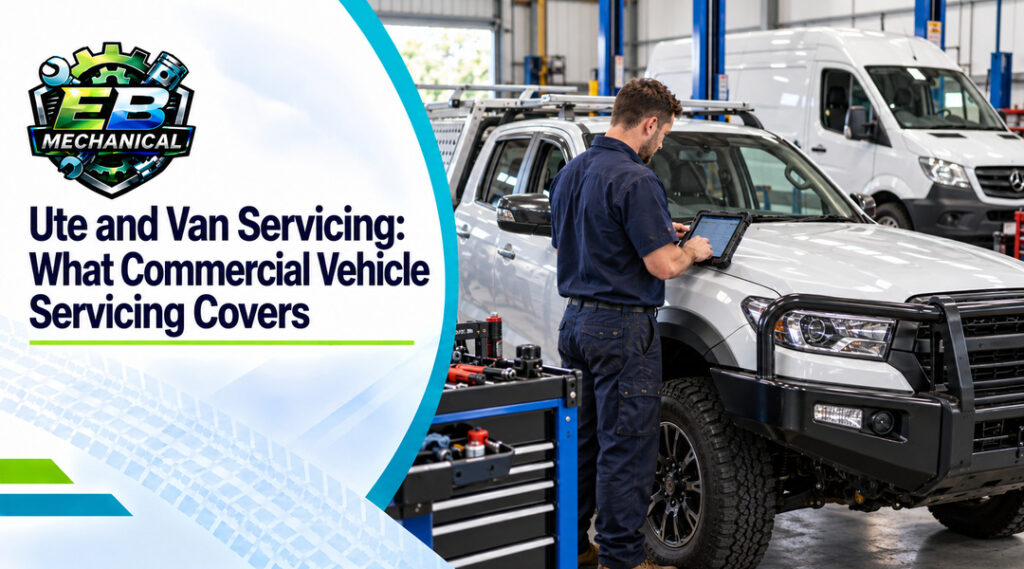
Commercial vehicle servicing covers the scheduled maintenance and mechanical checks needed to keep a work ute or van safe, reliable and suitable for daily use. Depending on the vehicle and its service requirements, this can include engine oil and filters, brakes, tyres, suspension, steering, fluids, battery, cooling system, transmission, drivetrain and electronic systems.
The exact work depends on the vehicle’s make, model, age, kilometres and operating conditions. A ute carrying heavy tools every day may need closer attention than a van used for occasional deliveries, even if both vehicles have similar odometer readings.
For a business, regular servicing is about more than keeping a vehicle on the road. It can help identify worn components before they become larger repairs and give you a clearer idea of when maintenance may be required.
What Is Commercial Vehicle Servicing?
Commercial vehicle servicing is routine mechanical maintenance for vehicles used to support a business or earn an income. This can include:
- Tradie utes carrying tools and equipment
- Delivery vans and courier vehicles
- Plumbing, electrical and construction vehicles
- Diesel utes used for regular work
- Small business vehicles
- Vehicles used for towing or transporting heavy loads
- Vehicles operated as part of a small fleet
Commercial vehicles often work harder than private passenger cars. They may travel more kilometres, carry heavier loads, spend more time in stop-start traffic or operate on dusty worksites and unsealed roads.
Frequent loading and unloading can also place additional strain on suspension, tyres, brakes and the vehicle’s interior. If the vehicle is used for towing, the transmission, cooling system, brakes and drivetrain may also experience greater stress.
There is no single service interval for every commercial vehicle. The manufacturer’s maintenance schedule should be the starting point, with the vehicle’s actual use taken into account.
What Does a Commercial Vehicle Service Include?
A commercial vehicle service may cover the following areas. The exact inspection and replacement work should be confirmed when booking.
| Service area | What may be checked | Why it matters |
|---|---|---|
| Engine oil and filters | Oil level, oil condition, oil filter and air filter | Helps protect the engine and maintain efficient operation |
| Fluids and leaks | Coolant, brake fluid, transmission fluid and visible leaks | Low levels or leaks can lead to component damage |
| Brakes | Brake pads, discs, callipers, lines and brake performance | Important for safe stopping, particularly when carrying loads |
| Tyres and wheels | Tread, pressure, uneven wear, sidewalls and wheel condition | Supports handling, braking and load carrying |
| Suspension and steering | Shock absorbers, bushes, joints, springs and steering components | Helps maintain control and ride stability |
| Battery and electrical systems | Battery condition, charging system, lights and warning indicators | Reduces the risk of starting and electrical faults |
| Cooling system | Radiator, hoses, coolant and signs of overheating | Helps prevent engine temperature problems |
| Transmission and drivetrain | Gear changes, clutch operation, driveshafts and CV joints | Important for vehicles used for towing or heavy work |
| Diagnostic systems | Warning lights and stored fault codes, where required | May help identify faults that are not visible during a basic check |
| Underbody and body condition | Damage, corrosion, leaks and loose components | Useful for vehicles used on worksites or unsealed roads |
Need to discuss a ute or van that is due for servicing? EB Mechanical provides general vehicle servicing and maintenance in Ormiston. Share the vehicle’s details and how it is used so the team can explain what may be required.
Engine Oil and Filters
Engine oil helps lubricate internal components and manage heat inside the engine. Commercial vehicles may cover more kilometres or spend long periods idling, which can place additional demands on the oil and cooling system.
A service may include replacing the engine oil and oil filter, checking the air filter and inspecting for visible leaks. Diesel vehicles may also have additional filtration and emissions-related components that need attention according to the manufacturer’s schedule.
Brakes
A loaded ute or van requires dependable braking performance. During servicing, the mechanic may inspect the brake pads, discs, callipers, brake lines and fluid condition.
Grinding, squealing, vibration through the pedal or pulling to one side should be reported before the appointment. These symptoms may indicate that the vehicle needs more than routine servicing.
Tyres and Wheels
Tyres on commercial vehicles can experience heavy wear, especially when the vehicle regularly carries equipment or travels over rough surfaces.
A check may include tread depth, air pressure, sidewall damage, uneven wear and wheel condition. Uneven tyre wear may point to an alignment, steering or suspension issue rather than a tyre problem alone.
Tyres should also be suitable for the vehicle’s load requirements and the type of driving it performs.
Suspension and Steering
Suspension components support the vehicle’s weight and help keep the tyres in contact with the road. Heavy tools, materials and regular towing can increase wear on springs, shock absorbers, bushes and other suspension parts.
The mechanic may also inspect steering components for looseness, wear or damage. A vehicle that feels unstable, bounces excessively or pulls to one side should be checked promptly.
Battery and Electrical Systems
A weak battery can cause starting problems, particularly in diesel utes and vans. Commercial vehicles may also run additional electrical equipment, including work lights, refrigeration systems, tool chargers, accessories or tracking devices.
Depending on the booking, the service may include checking the battery, alternator, lights, warning indicators and other basic electrical functions.
Cooling System
The cooling system helps control engine temperature. A commercial vehicle that tows, carries heavy loads or operates in hot conditions may place extra demand on the radiator, coolant, hoses and fans.
A mechanic may check coolant level, visible leaks, hose condition and signs of overheating. If the temperature gauge rises or the vehicle loses coolant, stop using it until the cause has been assessed.
Transmission and Drivetrain
The transmission and drivetrain transfer engine power to the wheels. A service may include checking gear engagement, clutch operation, transmission fluid where accessible and visible drivetrain components.
Warning signs include delayed engagement, slipping, harsh shifts, shuddering, unusual noises or difficulty selecting gears. These symptoms should be mentioned when booking because they may require diagnostic testing or a separate repair assessment.
How Often Should a Ute or Van Be Serviced?
Follow the service schedule provided by the vehicle manufacturer. Intervals are usually based on time, kilometres or whichever comes first.
The recommended interval may need closer attention if the vehicle:
- Carries heavy tools or materials
- Tows trailers regularly
- Travels on unsealed roads or worksites
- Makes frequent short trips
- Spends long periods idling
- Operates in dusty, hot or demanding conditions
- Covers high annual kilometres
- Is used for repeated stop-start deliveries
Keep records of servicing, repairs and odometer readings. Clear records can help with future maintenance planning and may support the vehicle’s resale value.
Between services, check the oil level, coolant, tyre pressures, lights, windscreen, wipers and dashboard warning lights. Do not ignore a new noise, vibration, fluid leak or change in performance.
What Extra Wear Should Commercial Vehicle Owners Watch For?
Commercial vehicles can develop wear in areas that are used more heavily than in an ordinary passenger car. These may include:
- Suspension components affected by constant loads
- Brakes exposed to heavy vehicle weights
- Tyres worn by high kilometres or worksite surfaces
- Clutches used frequently in traffic or while towing
- Cooling systems working harder under load
- Batteries supporting extra electrical accessories
- Door hinges, locks and sliding-door mechanisms
- Cargo areas exposed to tools, materials and repeated loading
The type of wear depends on the vehicle and how it is used. A service gives the mechanic an opportunity to identify visible problems, but some faults may require additional testing.
Warning Signs Your Ute or Van Needs Attention
Arrange an inspection if you notice:
- A dashboard warning light
- Difficulty starting
- New engine, brake or transmission noises
- Steering that feels loose or heavy
- Pulling to one side
- Excessive vibration
- Brake squealing, grinding or juddering
- A temperature gauge that rises
- A burning smell
- Oil, coolant or other fluid beneath the vehicle
- Reduced engine performance
- Uneven or unusually fast tyre wear
If a warning light is flashing, the vehicle is overheating or braking feels unsafe, avoid continuing to drive it unless necessary to reach a safe location.
Commercial Vehicle Servicing and Business Downtime
A planned service can be easier to manage than an unexpected breakdown during a busy workday. Before booking, tell the mechanic how the vehicle is used, how many kilometres it travels and whether it carries heavy loads or tows.
For businesses operating multiple vehicles, keeping service dates, repair records and odometer readings in one place can make maintenance easier to plan. This type of business vehicle maintenance can also help identify repeated issues across the fleet.
EB Mechanical also provides fleet maintenance services for businesses that need help managing more than one vehicle.
What Is the Difference Between Servicing and Repairs?
Servicing is planned maintenance carried out at set intervals. It may include replacing filters, changing oil, checking fluid levels and inspecting key components.
Repairs are carried out when a fault, failure or damaged component needs to be fixed. A service may identify a repair that should be completed, but it does not automatically include every repair required.
Ask the workshop what is included before approving additional work. A clear explanation of the fault, its urgency and the likely repair process can help you make an informed decision.
Does Commercial Vehicle Servicing Include a Queensland Safety Certificate?
No. A service and a Queensland safety certificate are different things.
A mechanical service assesses and maintains the vehicle’s condition. A Queensland safety certificate relates to registration and road-safety requirements in specific situations.
According to the Queensland Government’s safety certificate guidance, a safety certificate is generally required when transferring registration to a new owner, transferring a vehicle into Queensland from another state or territory, or re-registering an unregistered vehicle. Some exemptions apply.
A safety certificate covers minimum safety requirements. It is not a complete mechanical inspection and does not guarantee that a vehicle will not require future servicing or repairs.
How to Prepare for a Ute or Van Service
Before booking, prepare the following information:
- Vehicle make, model and year
- Registration number and current kilometres
- Fuel type and transmission
- The vehicle’s usual work
- Whether it carries heavy loads or tows
- Any warning lights or unusual symptoms
- The date of the last service
- Any recent repairs or modifications
- Your preferred timing and availability
Remove loose tools and equipment where possible. If the mechanic needs access to the cargo area, an empty or organised van can make the inspection easier.
Keep a list of symptoms rather than relying on memory. Note when a noise occurs, whether it happens when the engine is cold or warm and whether it changes under braking, acceleration or turning.
Frequently Asked Questions
What does commercial vehicle servicing include?
It can include engine oil and filters, fluid checks, brakes, tyres, suspension, steering, battery, cooling system, transmission, drivetrain and basic diagnostic checks. The exact work depends on the vehicle and the manufacturer’s service schedule.
How often should a work ute be serviced?
Follow the manufacturer’s recommended time and kilometre intervals. Heavy loads, towing, high kilometres, short trips, idling and worksite driving may require additional checks or more frequent attention.
Is van servicing different from car servicing?
The main inspection areas are similar, but vans may experience greater wear because of their load, usage and operating conditions. The service requirements still depend on the specific vehicle.
Does heavy towing affect servicing needs?
It can. Towing may place additional demand on the engine, transmission, cooling system, brakes, tyres and suspension. Tell the mechanic how often the vehicle tows and what it normally carries.
Can an independent mechanic service a commercial vehicle?
An independent mechanic can service many commercial vehicles, provided the correct procedures, parts and manufacturer requirements are followed. Ask the workshop whether it services your vehicle’s make, model and fuel type.
What should I do if my work van shows a warning light?
Do not ignore it. Record which warning light appeared and whether the vehicle is showing other symptoms. If the light is flashing or the vehicle is overheating, losing power or braking poorly, stop in a safe place and arrange professional assistance.
Does a service include a Queensland safety certificate?
Not usually. A mechanical service and a safety certificate are separate services. Confirm what is included when booking and check the Queensland Government requirements for your situation.
Ute and Van Servicing in Ormiston
Regular commercial vehicle servicing can help you stay ahead of wear, understand upcoming maintenance and keep your work vehicle suitable for daily use. The right service approach depends on the vehicle, its workload and the conditions it operates in.
EB Mechanical is an independent workshop at 5–7 Gordon Street, Ormiston, Queensland. The team works on cars, 4WDs, diesel vehicles, utes, vans and light commercial vehicles.
For diesel work vehicles, see EB Mechanical’s diesel repair service. For utes and vans used in demanding conditions, you can also learn more about 4WD and commercial vehicle repairs.
To discuss a commercial auto service for your ute or van, contact EB Mechanical and provide the vehicle details, current kilometres and the type of work it performs.
Need a car service in the Redlands?
EB Mechanical services and repairs all makes and models at our Ormiston workshop, close to Cleveland, Wellington Point and Capalaba. Clear advice and approved quotes before any work starts.